THE TOBACCO AFFAIR
As a part of the project «Incredible Port»
In December 1993, the news “Tobacco is burning in the port!” dominated conversations across Odesa. Over the first ten days of the month, more than 1,800 tonnes of scorched and foam-soaked tobacco leaves were transported from Khlibna Harbour to the municipal landfill. Many local pensioners then made headlines themselves by bringing the tobacco back – carrying it on suburban trains in bags and backpacks, and drying it on their balconies.
The first noticeable market reaction came from Pryvoz, where prices for smuggled cigarettes dropped sharply. For perspective: the Odesa Tobacco Factory processed around 500 tonnes of raw material annually.
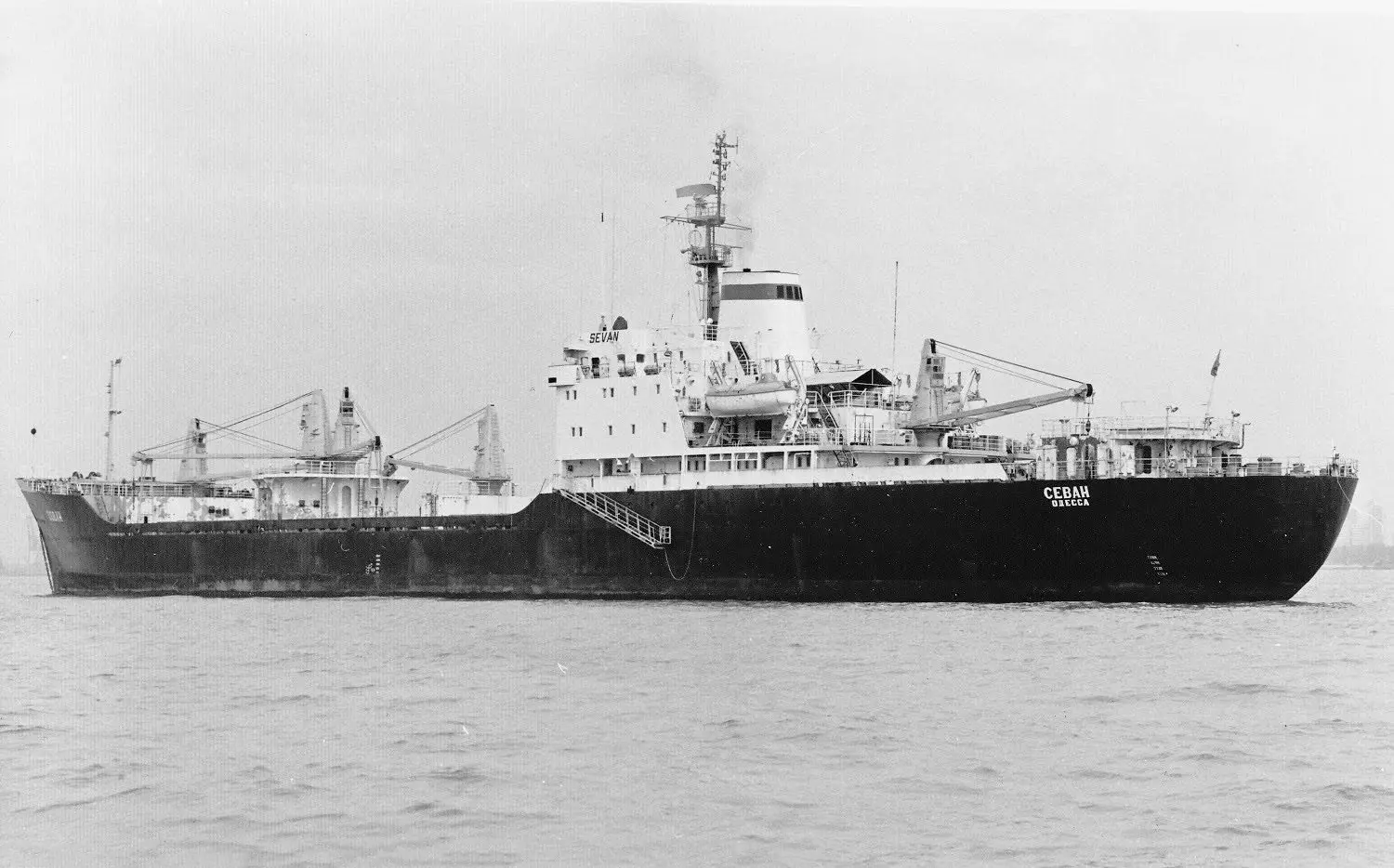
During Soviet times, the Port of Odesa served as a major transshipment hub for foodstuffs and consumer goods for the entire country. But by the end of 1991, that country had collapsed - while cargo contracted in its name kept arriving at Odesa’s anchorage for years. So it happened with the motor vessel Sevan, which at the end of 1993 delivered 5,000 tons of baled tobacco leaves contracted by the now-defunct state enterprise “Soyuzplodoimport.” It took two months to search for new owners and settle payment issues for the vessel’s handling in a now-Ukrainian port.
The Sevan was finally berthed at Berth No. 32 of Khlibna Harbour on 30 November. When dockworkers opened the hatch covers, the cargo – warmed during the vessel’s long stay - reacted to the influx of oxygen and began to smoke. Within half an hour, flames were visible in Holds 2 and 3.
Firefighters arrived promptly and began extinguishing the fire with seawater. However, the water accumulated on one side, causing the vessel to list dangerously. The situation grew increasingly critical: continuing the flooding risked capsizing the vessel, while stopping could lead to an explosion of the fuel tanks located beneath Hold 4. Not far away was the port’s Oil Harbour, raising the stakes even higher.
A risky but decisive solution was chosen: to unload the tobacco from the smoke-filled vessel. The cargo owner’s representative promised the port workers “any amount of money” if they undertook the operation—and they agreed.
The unloading was carried out under near-extreme conditions. Bales were lifted from the tween decks and holds using a portal crane with a hanging grapple. T-515 loaders with open tops moved the bales to the hatch openings. Volunteer dockworkers operated in gas masks, working in short 15–20-minute rotations. Each carried a radio for safety. Damaged tobacco was dumped directly onto the quay and taken to the landfill, while undamaged bales were loaded onto non-self-propelled barges for onward delivery.
Thanks to the courage and professionalism of the PPC-5 team of the Port of Odesa, more than 2,000 tonnes of high-quality tobacco leaf were rescued from the vessel Sevan and delivered to their consignees.
In December 1993, the newspaper «Odeskyi Portovyk» published the names of the dockworkers involved: V. Homych, A. Burylin, A. Makarenko, V. Bilous, V. Tadyka, E. Krykunov, Yu. Zhydkov. The operation was led by M. Amelin, Head of PPC-5 (Khlibna Harbour).