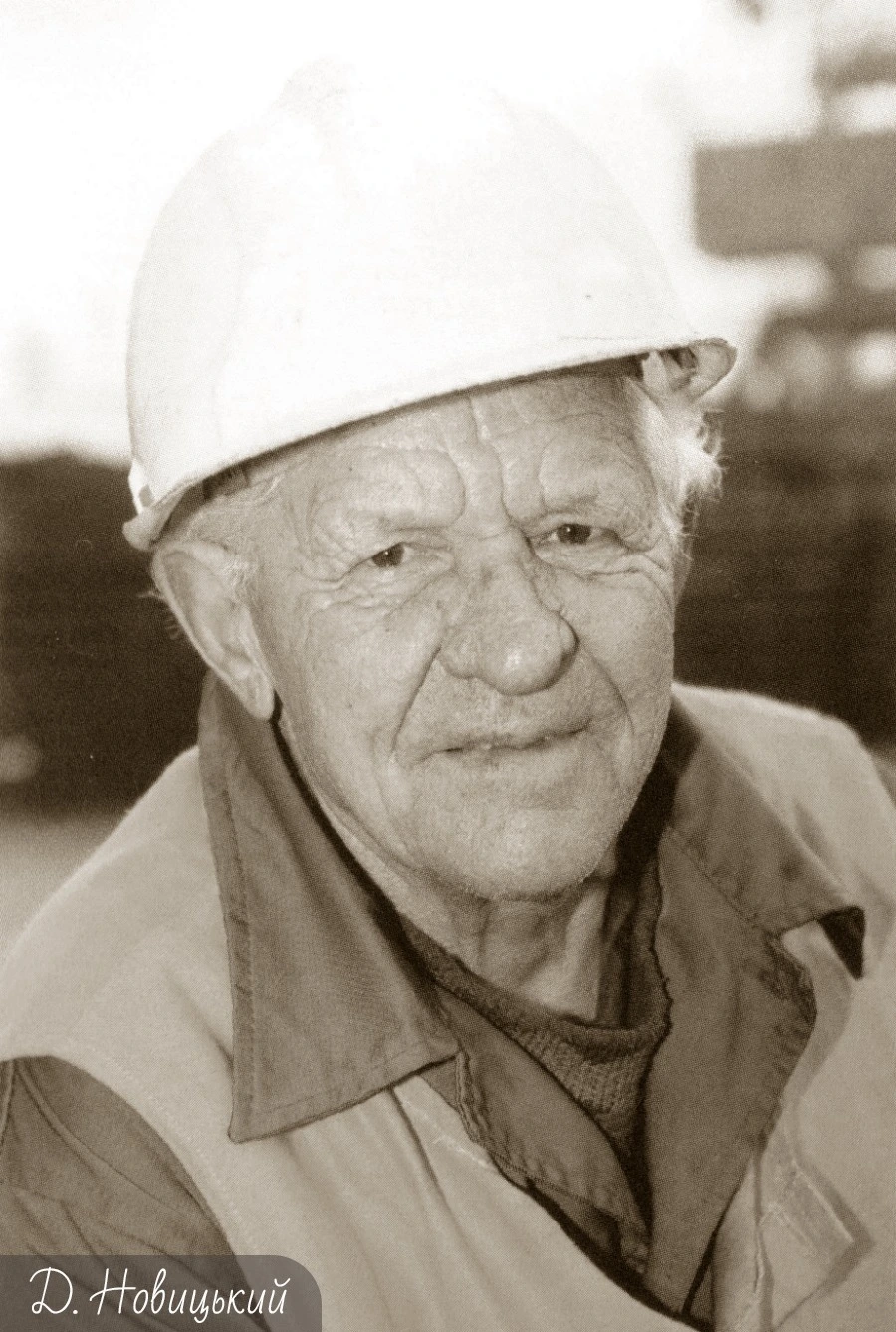
The Hero of the «Izhora» Unloading Epic
As part of the «Incredible Port» project
In 1999, Dmytro Novytskyi* celebrated a double anniversary — his 75th birthday and 50 years of work experience at the Port of Odesa. On the day of his anniversary, the veteran went to the Lanzheron City Beach… to test the watch. This expensive Swiss watch was presented to Dmytro Hryhorovych on the occasion of the significant date on behalf of the port administration and the trade union.
Therefore, Novytskyi, an experienced winter swimmer, was eager to test whether the timepiece would indeed remain undamaged if, for example, he were to dive with it to a depth of 10 metres (!).
The habit of swimming in the sea from March through November inclusive was formed in the stevedore foreman Novytskyi many years ago, following the epic unloading of the vessel «Izhora»...
Sometime in the mid-1960s, the motor ship «Izhora» delivered 15,000 tonnes of Cuban raw sugar to the Odesa roadstead. On its way back to home waters, the vessel was delayed for some time in tropical latitudes. As a result, the cargo in the hold compacted and literally hardened into a candy-like mass.
In addition, dangerous quarantine pests were found in the cargo. To eliminate them, fumigation (treatment with toxic gas) was carried out. During the vessel’s stay at the roadstead, the sugar finally turned into a solid, stone-like mass and absorbed so much of the fumigant that no ventilation could reduce the hazardous concentration of gas.
Further ventilation could have brought the cargo to such a condition that it would have had to be destroyed together with the vessel. Accordingly, the issue of disposing of the «Izhora», in view of circumstances of force majeure, was already on the agenda of the Black Sea Shipping Company.
However, volunteers were found at the Port of Odesa who agreed to unload the vessel. The first aboard the «Izhora» was Dmytro Novytskyi’s 213th brigade. They were followed by comrades from the 228th brigade (foreman — Savin), and then the 233rd brigade (foreman — Klochkov)…
In terms of its drama, the handling of the «Izhora» probably had no parallel in the port’s history. The sugar was doused with water, steamed using tugs, broken up with jackhammers, and loosened with specialized equipment. But for the most part, it was “pickaxed” by hand.
People in the hold were exhausted from fatigue and thirst, removing their gas masks to breathe the toxic fumes. With great difficulty, the «Izhora» was unloaded in half a month. The cargo was transported to a disposal site and burned under the supervision of the sanitary authorities.
Many participants in this epic operation began experiencing health problems immediately afterward. Those affected were promptly provided with vouchers for sanatorium treatment. After his stay at the sanatorium, foreman Novytskyi even began taking sea baths year-round.
The foreman was used to always feeling «in shape». No sick leaves for him. Working on the docks was the meaning of his life…
When a monument to the Docker was unveiled at Customs Square in the summer of 2002, the port workers unanimously concluded that the sculptor had been inspired by the image of Dmytro Hryhorovych while creating the monument.
*Dmytro Novytskyi is a veteran of the Second World War. He served in a regimental reconnaissance unit and was awarded the most prestigious military honors for bravery - the three classes of the Order of Glory. He joined the Odesa Port as a stevedore in 1949 and, in 1957, became head of a stevedore brigade. Dmytro Novytskyi’s total work experience at the enterprise amounted to almost 55 years. He was also awarded the Order of the Red Banner of Labour.