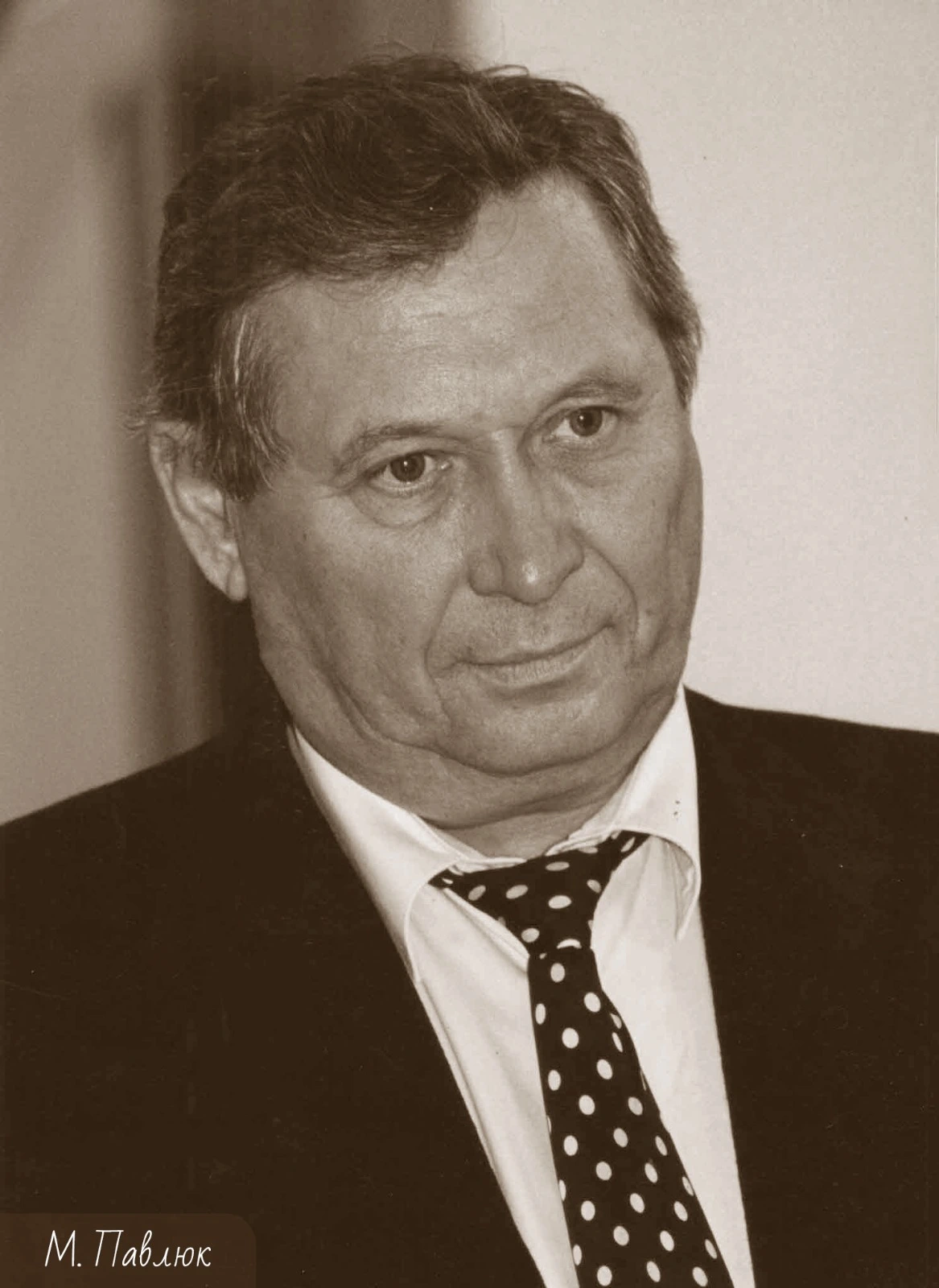
Mykola Pavliuk — a Living Legend of the Port of Odesa
As part of the «Incredible Port» project
Try to find another head of a maritime transport enterprise who began his career as a simple dockworker — literally “under the sack.” And let us recall that sacks of Cuban sugar weighed 117 kilograms.
Dockworker, stevedore, dispatcher, chief dispatcher, Deputy Port Director for Operations. And, ultimately, Port Director from 1985 to 2011 (with the exception of the period of parliamentary service in the Verkhovna Rada of Ukraine).
In 2000, Mykola Pavliuk was awarded the highest state honor — the title of Hero of Ukraine — and was also granted the title of Honorary Citizen of Odesa.
This became an act of recognition of the merits of a highly professional specialist and public figure who, in the literal sense, turned the Odesa Commercial Sea Port into the leading port of the Black Sea. In turn, this had a positive impact on the socio-economic development of the country’s largest coastal metropolis.
After the collapse of the USSR, the port lost about 80 percent of its cargo flows. It was at that critical moment that Mykola Panteleimonovych initiated a profound reform of the port’s economic and financial management system, transitioning it to market principles.
At that time, the legislation prohibited state bodies from establishing joint ventures with foreign private companies. In this situation, the Port Director proposed an alternative model—not a joint venture, but a joint activity arrangement, providing for equity participation in investments and the distribution of profits.
Despite enormous difficulties—the absence of a legal framework and resistance from government authorities—this bold innovation was implemented. Leading foreign companies entered the Port of Odesa, bringing with them their experience, technologies, and, most importantly, their own cargo flows. As a result, by the turn of the 2000s the port reached record cargo-handling volumes comparable to those of the Soviet period and contributed to the state budget nearly half of all taxes and payments generated by Ukraine’s 18 seaports.
Rapid development enabled the enterprise to accumulate substantial financial resources, which the management of the Odesa Commercial Sea Port, headed by M. Pavliuk, promptly reinvested in production. In 1992–2002, the oil and petroleum products transshipment complex (the oil terminal area), the ballast water treatment station, the largest passenger terminal in Europe on the New Mole, as well as the port’s heat and water supply, energy, and communications systems, were reconstructed.
Substantial investments were also directed toward the creation of modern terminals for container handling, liquefied gas, and other cargoes. As a result, the Port of Odesa became universal, environmentally responsible, digital, and truly European — in line with the best global practices of maritime cargo operations.
Special mention should be made of Mykola Pavliuk’s project to construct a unique six-kilometer road overpass, which completely removed freight road transport from the city streets and opened up new opportunities for increasing cargo flows, primarily container traffic.
Today, the Odesa Port overpass officially bears the name of its founder. In essence, the plaque reading “M. Pavliuk Transport Overpass” may be regarded as a historical marker of the achievements of the port’s workforce during the first decades of Ukraine’s independence.
Within the professional maritime community, the name of Mykola Pavliuk is spoken with sincere respect, acknowledging him as a true “patriarch of the industry.” Even today, on the quays of the Port of Odesa, senior dock workers recount authentic stories to younger colleagues about his management style and extraordinary character.
One such legend tells how Mykola Pavliuk cured certain representatives of Western business of their sense of superiority toward Ukrainian partners.
In the early 1990s, one international trading company operating a cargo transshipment complex in the port allowed itself to delay payments stipulated under a joint activity agreement.
— You see, — the company’s Chief Executive Officer justified himself, — what matters for you today is not so much the timeliness of our payments as the very fact of our presence at the berths. After all, our company is a brand. We have technologies, we have cargo, and we have many years of experience operating in African countries…
Mykola Pavliuk listened to this tirade without much interest and clearly set a deadline: if the funds were not transferred to the port’s account within 24 hours, decisive measures would be taken.
Twenty-four hours passed. The money did not arrive.
Then the Head of the Port called the debtors and said quite plainly:
“The Odesa Port is ready to reconsider the advisability of cooperating with your company. And please remember: this is not an African country”.
After that, he summoned the chief dispatcher and gave the following instructions:
“Electric power supply to such-and-such a company is to be suspended, and its vessels are not to be berthed until all outstanding debts have been paid”.
The funds were received immediately. From that moment on, in the presence of the Port Director of Odesa, no one ever boasted about their experience working in other countries.
Today, Mykola Pavliuk remains an integral part of the Odesa Port—now in the capacity of Honorary President of the enterprise. He generously shares his invaluable experience, offers wise advice, provides consultations, and genuinely cares about the port’s future. For him, the Odesa Port is not merely a place of many years of work, but a true destiny, a second home, and perhaps even a first. It is here that his character, principles, and legend were formed—a legend that continues to live on together with the port and the people who work there.