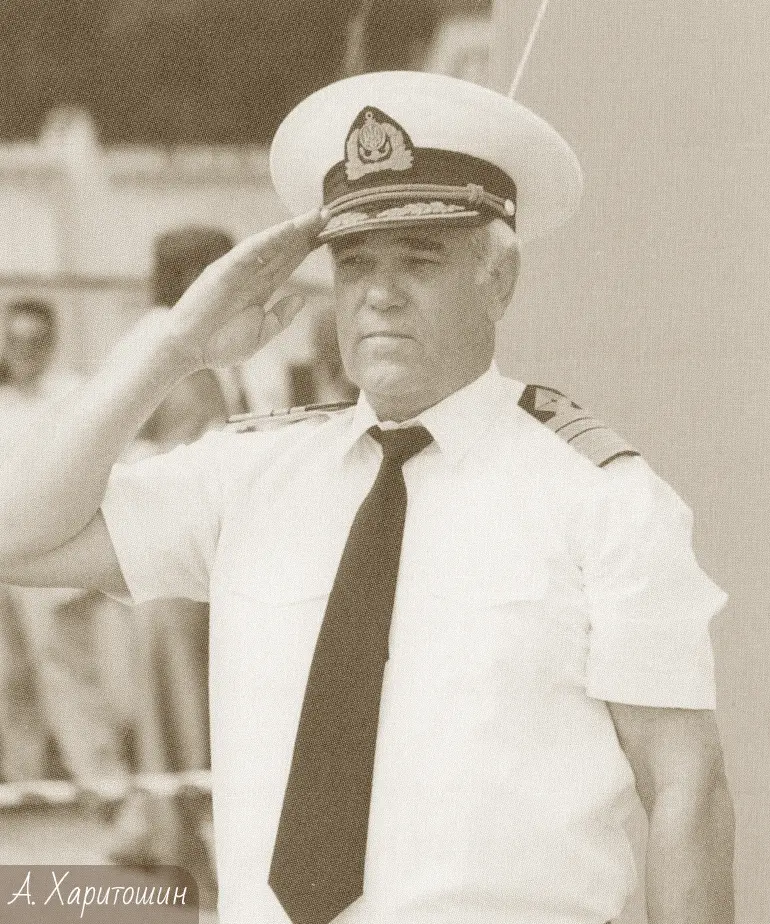
HOW CAPTAIN KHARYTOSHYN BECAME A LINE PILOT
As part of the «Incredible Port» project
1992. A time of great upheavals and no lesser trials. It was during those first years of Ukraine’s independence that a story unfolded in the Port of Odesa which still seems almost unbelievable today.
The navigational conditions in the Port of Odesa are among the most challenging in the Black Sea basin. Vessels pass through the Vorontsov Gates with active maneuvering, and the harbors themselves are small — they were built back in the days of the sailing fleet. That is why pilot training here must be of the highest standard.
Normally, in the largest port of Ukraine, which received up to 1,200–1,500 large-tonnage vessels per year, pilotage services were provided by 12–15 highly qualified and experienced specialists. Now compare this with the following fact: for two summer months in 1992, bulk carriers and tankers were brought into the Port of Odesa and, after cargo operations at the berths, taken back out to the open sea by… only three pilots, two of whom were office employees (!).
A fact worthy of a place in the Guinness Book of Records. But this story is not about records — it is about how such a situation was even possible.
1992 was a year in which the building of the young Ukrainian state went hand in hand with the restructuring of the economy from a command-and-control system to a market economy. Naturally, various commercial groups sought to take advantage of the difficulties of this transitional period.
One public organization set itself the goal of “privatizing” the work of pilotage services in seaports, thereby redirecting the funds from pilotage dues to private accounts. They decided to start with the Port of Odesa.
On June 10, 1992, envoys came to the port captain, Andrii Kharytoshyn, with a project to remove the pilotage service from the jurisdiction of the Odesa Commercial Sea Port and establish a commercial enterprise on its basis. In return for participating in this scheme, Andrii Pavlovych was promised attractive bonuses.
However, bonuses held no interest for the port captain. “I don’t need commercial operators. I need state pilots,” he said, making it clear that the discussion was over.
The response from the opposing side was just as decisive: the very next day, June 11, 1992, the pilots of the largest seaport in Ukraine went on strike.
The organizers assumed that the port’s operations for receiving cargo vessels would come to a stop within two days at most. After all, among all the line pilots, only one – Ivan Sukhan – refused to support the strike. True, two more specialists held licenses to pilot vessels to the berths: the port captain himself, A. Kharytoshyn, and the head of the pilotage service, Stanislav Pantak. But the organizers believed they could be disregarded – both had long since become office workers.
In short, the organizers knew what they were doing. The only thing they failed to account for was the human factor. They did not foresee that Kharytoshyn and Pantak would lock their offices and, for a time, become line pilots themselves.
Over two summer months of 1992, the trio – Kharytoshyn, Pantak, and Sukhan – carried out more than five hundred pilotage operations without a single accident (!). They lived in the port under barracks conditions, sleeping in short intervals of just two to three hours. The strain of the forces was incredible.
But the effort was worth it: the handling and servicing of vessels at the Port of Odesa did not cease for a single day. The port persevered. Within two months, new pilots – urgently recruited from among deep-sea captains – completed their training. As soon as the first of them stepped aboard a pilot boat “without a mentor,” the strike lost any meaning at all.
Interestingly, when the striking pilots who had been dismissed from the port asked to return to work, many of them were rehired – of course, upon the recommendation of the port captain, A. Kharytoshyn.