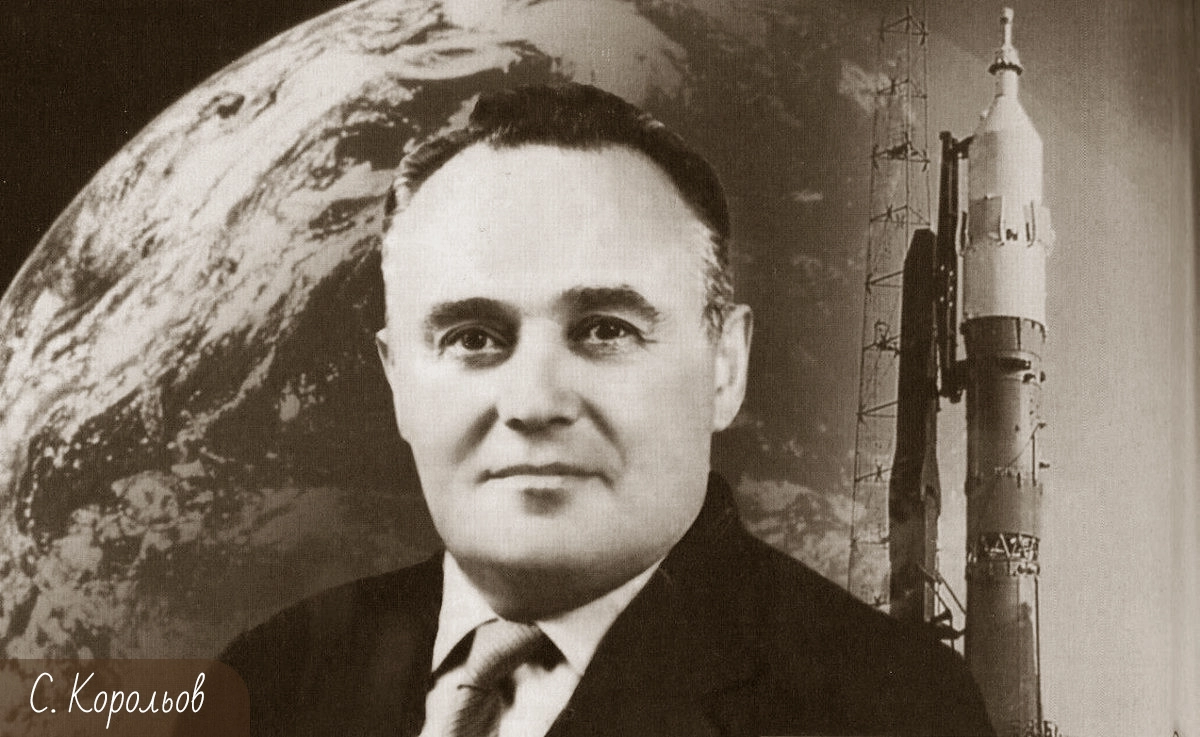
SERGEI KOROLEV’S FIRST COSMODROME
As part of the project “Incredible Port”
In February 2026, SpaceX officially confirmed a shift in priorities, postponing its Mars mission that had previously been planned for this year. The main goal of American entrepreneur Elon Musk is now to build a “self-sustaining city” on the Moon.
This news is a good reason to recall a little-known fact: the first launch of the automatic interplanetary station “Mars-1” on November 1, 1962, carried out under the leadership of the brilliant rocket engineer and founder of practical astronautics, Sergei Korolev.It is also not widely known that Korolev first took to the sky as a child – in the Port of Odesa. And this is not just a figure of speech: not near the port, but right inside it.
In the early 1920s, the Hydro-3 aviation unit of the Black Sea Fleet Air Forces was based in the waters of the port. The unit’s flying boats carried out patrol service and took part in annual autumn maneuvers: conducting reconnaissance, adjusting artillery fire, performing training bombing and machine-gun exercises, and maintaining communication between the squadron and shore units. At times, naval pilots were also involved in peaceful missions: searching for ships and barges carried away by storms, assisting vessels in distress, and patrolling the maritime border to detect smugglers.
The Hydro-3 unit was stationed on the gentle shore of Odesa Bay, in the area of today’s Khlibna and Zavodska harbors. The unit had eight seaplanes equipped with French Salmson engines producing 120 horsepower. The aircraft, with yellow fuselages and green wings, proudly bore painted names such as “Falcon,” “Eagle,” and “Savoy.”
The planes were old and required constant repairs and careful preparation before each flight – but they flew without interruption.
Training flights were carried out every day. In the mornings, the Hydro-3 base filled with the loud voices of mechanics and sailors as they rolled the seaplanes out of the hangars, placed them on special carts, and pushed them toward the slipways. There, the aircraft were carefully moved onto wooden platforms and gently lowered into the water.
Watching the life of the unit through a wire fence was a curious boy of thirteen or fourteen – the stepson of the port power station chief, Hryhorii Balanin. His name was Sergei. He tried to come to his observation spot near Weinstein’s mill at the most exciting moments – during takeoffs and landings. He dreamed of meeting the brave pilots, and one day he got the chance: he was invited to help push a flying boat into the water.
That first meeting became the starting point of a true friendship. Sergei became fascinated with aviation technology, spent all his free time at the unit, and learned how to take apart and repair mechanisms. He was allowed to sit in the cockpit, hold the controls, turn the propeller blades, and start the engine. His new passion required not only skillful hands but also knowledge. In the evenings, Sergei would ask his stepfather, an engineer, countless questions about seals, magnetos, connecting rods, and pistons.
Eventually, the boy became so helpful that the commander of Hydro-3, Oleksandr Shliapnikov, decided to reward him by taking him on a flight over Odesa from the sea.
At last, Sergei’s dream came true – he rose into the sky. The first thing he saw from above was the line of the port’s piers, the Potemkin Stairs, the multi-faceted building of the Odesa Opera and Ballet Theatre, and the streets of Odesa’s historic center stretching in all directions.
From that flight began the path of a great designer – the author of space achievements that amazed the world:
- — the launch of the first artificial Earth satellite on October 4, 1957;
- — the first successful launch of an automatic interplanetary station to the Moon on January 2, 1959;
- — the first launch of living creatures into orbit (the dogs Belka and Strelka flew into space and returned to Earth on August 20, 1960);
- — the first human spaceflight on April 12, 1961.
By that time, Sergei Korolev was already known worldwide – General Designer of rocket and space systems, academician, and head of a vast “classified” network of research institutes in the space industry. He visited Odesa many times.
His last visit was in the summer of 1959. While vacationing with his wife, he decided to take a cruise along the Crimean-Caucasian line. During a stop at the Port of Odesa, the academician personally reviewed the installation of floating tracking stations for artificial Earth satellites aboard the steamships “Krasnodar” and “Illichivsk”.
Forty years later, during the reconstruction of the port’s road transport system, the old building of the former power station was demolished. However, the administrative building where Hryhorii Balanin and his family lived from 1917 to 1924 has been preserved. Today, a memorial plaque with a bas-relief of Sergei Korolev can be seen on the wall of this two-story building.
The Port of Odesa gave a start in life to thousands of talented people. Most of them became sailors. In this list, Sergei Korolev holds a special place. He did not become a sailor or a cosmonaut. He opened the era of practical space exploration for humanity. January 2026 marks 60 years since his passing – a great loss for world science. In 2027, the world will mark the 120th anniversary of the birth of this outstanding designer. These dates are an opportunity to once again remember the scale of his personality and his invaluable contribution to space exploration – a contribution that still shapes the global space industry today.