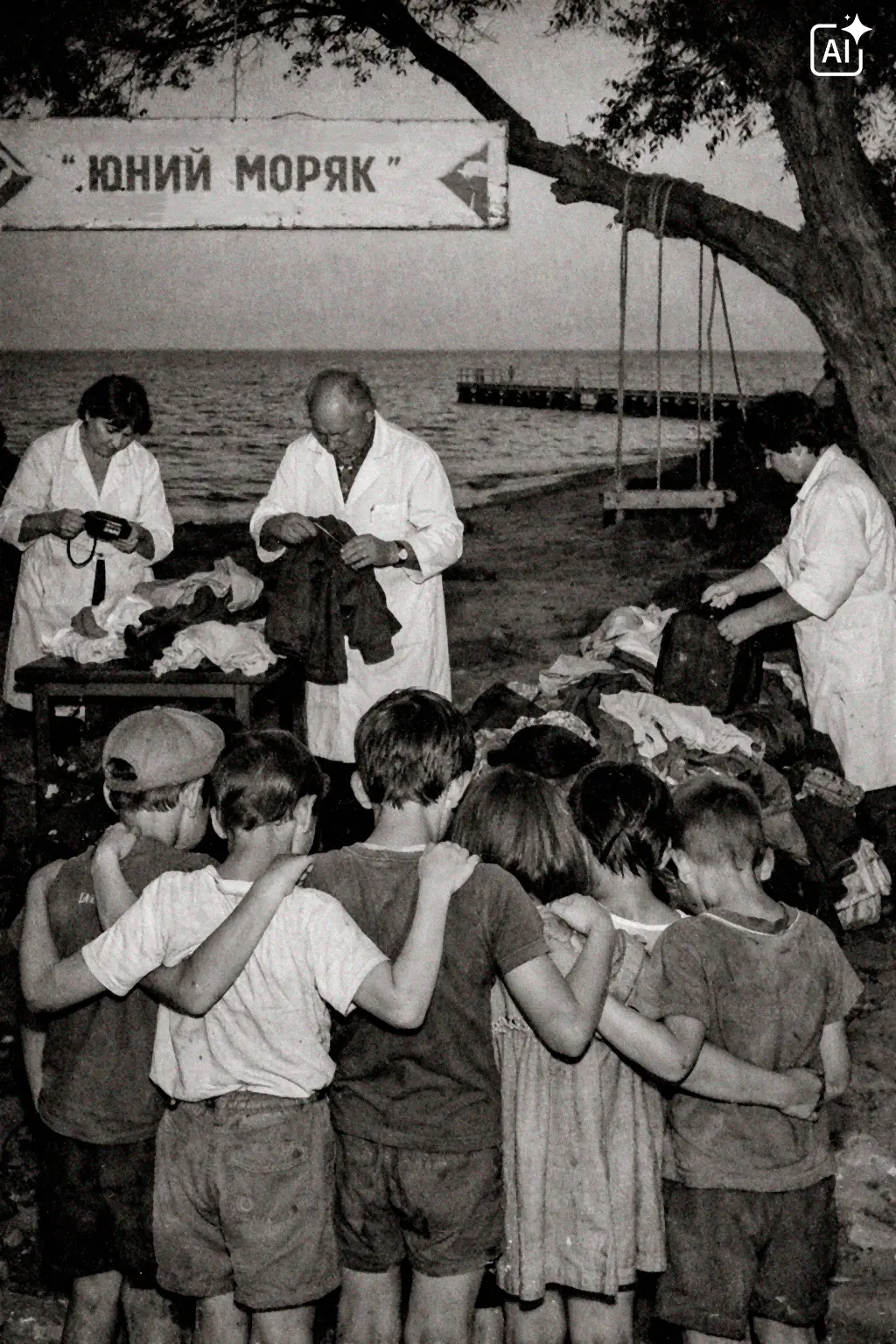
The Chernobyl Watch of the “Young Sailor” Camp
As part of the “Incredible Port” project
In 2026, 40 years have passed since the Chernobyl tragedy. The memory of it is not only about pain and loss, but also about humanity that endured…
Traditionally, children’s camps in Ukraine opened on June 1, International Children’s Day. That was planned in 1986 as well. However, in late April, the Head of Odesa Port, Mykola Pavliuk, unexpectedly called in the Director of the “Young Sailor” camp, Tetiana Faryk, and gave her a task that had to be done: within a week, the camp had to be ready to receive evacuated children. The dormitories, boiler room, and 300 sets of clothing – from jackets to underwear had to be prepared.
Evacuated children? From where?
The answer came only on April 30, over the radio. For the first time, the country collectively repeated a word that would forever change its history - “Chernobyl.”
Preparations at the “Young Sailor” camp continued around the clock. Buildings were painted, the boiler room was repaired, and supplies were delivered. At night, work went on under floodlights. The Head of the port personally oversaw the readiness of the boiler room, insisting that showers and hot water be available day and night without interruption.
On May 6, 1986, the first group arrived – 305 boys and girls. They were scared and quiet, staying close to each other as if trying to hide from something they couldn’t see. The children started crying when officials began taking away their clothes, bags, and jars of homemade food.
“It’s all contaminated with radiation,” they explained, while trying to reassure them.
At first, the camp director did not fully believe in this invisible threat. That changed when a dosimeter was held up to her hair. After just a few hours of contact with the children, the entire camp staff was already “glowing”.
The territory of the “Young Sailor” camp was small. The children were cramped, they missed home, cried, quarreled. To ease the tension, camp counselors took groups to the beach every day. The sea – incredible, warm, and endless, would, for a while wash away all the children’s fears and sorrows.
By mid-May, parents began arriving – 10 to 20 visitors each day. It became easier for both the children and the staff. The first session passed, then the second. New groups continued to arrive during the autumn and winter holidays.
For five years, the “Young Sailor” camp of the Odesa Sea Commercial Port welcomed children affected by Chernobyl from the Tarashcha, Vyshhorod, and Borodianka districts of the Kyiv region – on average about 900 children per season. The port administration, trade unions, and community organizations did everything possible to make each stay a bright pause in their traumatic childhood. The port had the resources for this: excursion boats, access to scarce food supplies, the hospitality of Odesa – and, most importantly, human warmth that no instrument can measure.
It was a quiet, daily watch of compassion. Without pathos, but with a deep sense of responsibility for those whom Chernobyl forced to grow up far too soon.