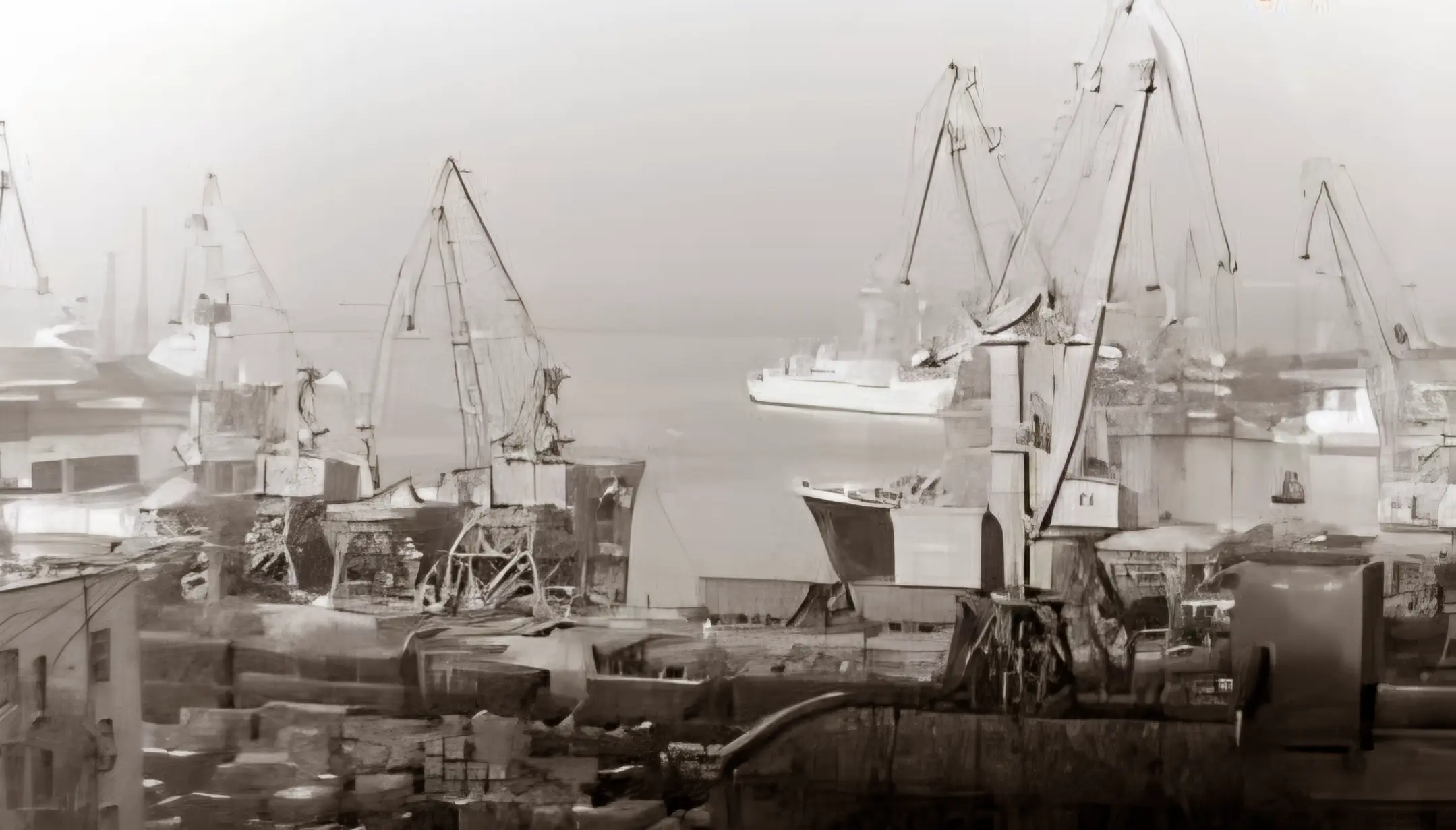
By the Laws of Physics, or 18 Meters of Ingenuity
As part of the “Incredible Port” project
There are never any boring stories in the Odesa Sea Port. Even physics works there with an Odesa accent — with humor, swagger, and a touch of “let’s see how it goes.” Here is one such story told by port veteran Heorhii Ovanesian.
Early 1970s. The port is unloading imported grain — there is so much work that tea cools down faster than a docker can take a sip. Then a large-tonnage vessel arrives — impressive, respectable, and with character.
The unloading had barely begun when trouble struck: a grab bucket caught the protective pipeline grating in the upper part of the cargo hold. It was damaged.
The captain, a man of principle, immediately made his position clear: — I will not sign the documents. Either repair it, or goodbye.
At the Odesa Sea Port, such words are taken as a challenge.
Specialists from Ship Repair Plant № 1 were urgently called in. They inspected the situation from above, then climbed down to the bottom of the hold and delivered their honest engineering verdict: — It can be done. Repaired — easily. Replaced — no problem
— But how do we reach it? — everyone asked.
And then — silence. Because that grating was 18 meters above. This was no matter of bringing in a stool. It was three meters higher than a standard five-story Khrushchyov-era apartment building. By every rule, the solution seemed obvious: build scaffolding, assemble structures, spend ten days on the work. The captain was already mentally aging through those ten days.
Then an engineer from the port mechanization department appeared — a man who seemed to have more than just a good relationship with physics; it was almost a romance: — What if… we fill the hold with water?.
At first, everyone thought it was a joke. Then they realized it was not.
The next day, it seemed half the port came to watch how serious grown men were preparing to repair a vessel… while floating.
The hold was carefully filled with seawater. A wooden raft was lowered inside. On the raft — workers, welding equipment, and tools. The scene looked less like a port and more like a traveling circus dedicated to the laws of physics.
The raft slowly rose to the required height. The workers, as calmly as if they did this every day, replaced the grating. No scaffolding. No cranes. Simply because water, as everyone knows, lifts.
Of course, there were risks. The vessel could have shifted or listed — after all, the hold had been filled with water. But cargo in the other holds acted as ballast. And the captain… the captain turned out not to be easily frightened. Perhaps he also understood that physics is a reliable thing — if you know how to negotiate with it the Odesa way.
The work was completed quickly. The documents were signed. The vessel departed.
And for a long time afterward, the port still remembered that day — when repairs turned into a show, and an engineering challenge was solved not with more steel, but with ingenuity.
That is why people say Odesa port workers are incredible. Because where others build scaffolding, they simply raise the problem… to water level.