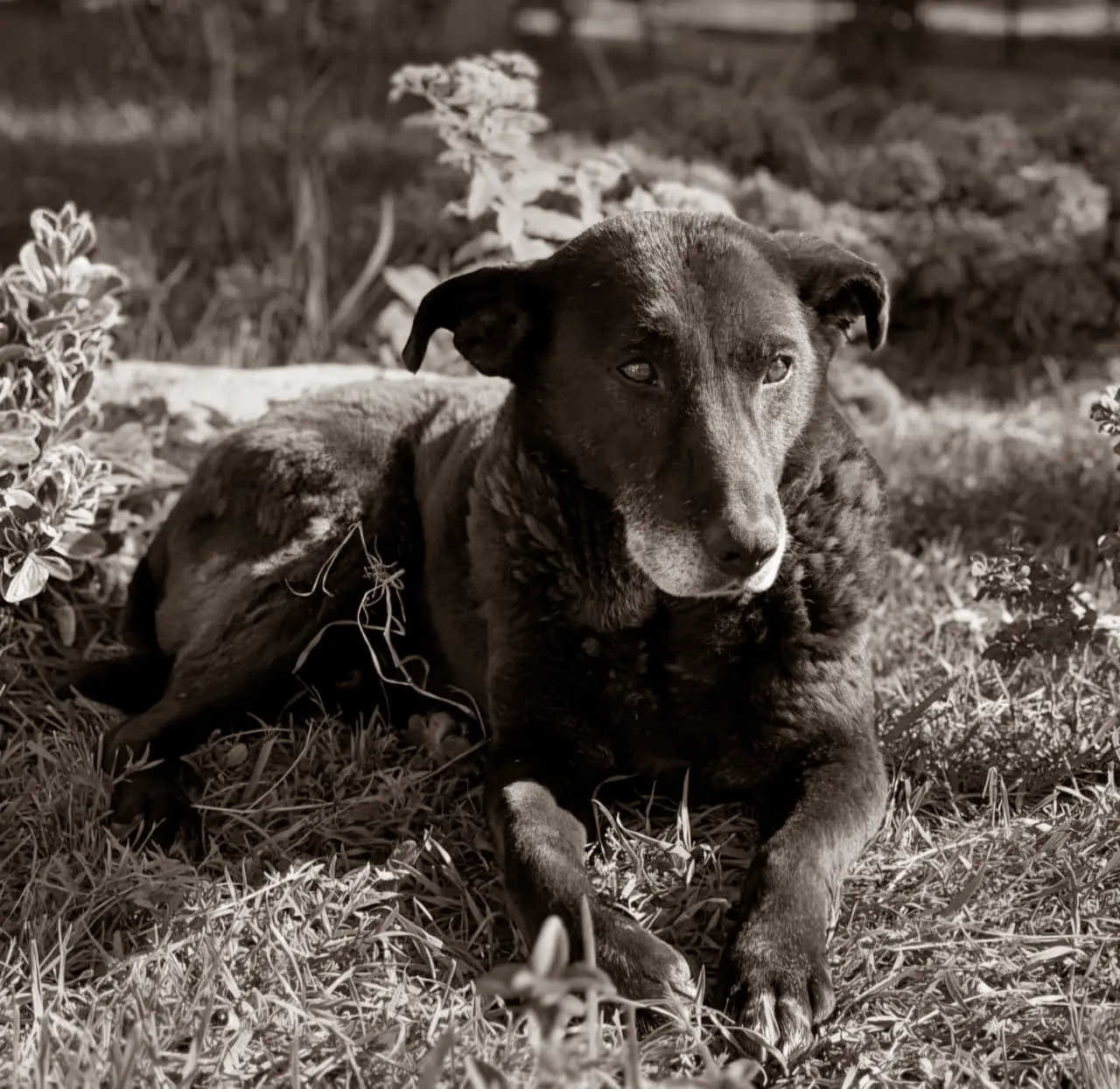
A Territory of Humanity: Four Stories of Port Dogs
As part of the “Incredible Port” project
“The Incredible Port” is not only about cargo, machinery, or records. It is also about people—their ability to notice suffering and help those who cannot ask for help themselves.
The treatment of stray animals has always been a kind of test of humanity at the Odesa Sea Port. Although keeping animals on the enterprise’s premises is strictly prohibited, they often find themselves here because of human cruelty and irresponsibility — abandoned near the checkpoints, left to fend for themselves among the berths, cranes, and the constant roar of metal.
That is why, despite the regulations, port workers sometimes step in to help. In every port yard, workshop, or maintenance depot, there are small secret places: two bowls—one with food and one with water. And in almost every department, people can tell you a story about their own four-legged companion. Here are just a few of them.
Once, a black mixed-breed puppy found his way here. Someone had thrown him out from the slopes of Shevchenko Park, casting him into port life among cargoes and cold sea winds. He was named Dushman. At night, Dushman guarded the maintenance yard so effectively that no scrap-metal thief dared climb over the fence. During the day, he would sleep wherever he felt like it. Sometimes he would stretch out right in the middle of a service road, and drivers of heavy-duty trucks would silently steer around him without honking or complaining—as if he were one of their own. Covered in port dust, the black dog wore a black neckerchief around his neck. He had an absolute dislike for collars.
Bonifatsiy was another famous port dog. He assisted pilot Viktor Richter in mooring passenger liners at the Odesa Marine Terminal. Stories about him appeared not only in “Odeskyi Portovyk”, but even in the legendary American magazine “Life”.
Perhaps one of the most heartwarming stories, however, is that of an ordinary yard dog named Silva from the Second Cargo District.
One day, a German vessel berthed at the berths №14. On board was a purebred German Shepherd with an impeccable pedigree. The moment he saw Silva, he fell in love.
While the ship remained at the berth, a romance blossomed between the two dogs. And when the time came for the ship to sail, it became clear that the matter was serious. The German Shepherd refused to return on board. He hid from his owner, doing everything he could to avoid leaving his beloved behind.
Not long afterward, Silva gave birth to six puppies. They needed milk. At first, port workers brought it from home. Then a group mechanic came up with a brilliant solution — he added Silva to the list of workers who qualified for the port's free milk program. For several months, among the names of actual workers on the distribution records, there officially appeared: “Silvin I.I.”
Yet some port stories still tighten the heart when remembered.
In late February 2011, severe frost locked the waters of the Odesa Sea Port beneath a thick layer of ice. Icebreaking tugboats carved narrow channels through the frozen harbor for ships to pass. It was then that sailors spotted a red-coated German Shepherd stranded on the ice.
The dog wandered between the Quarantine, New, and Coastal Harbors, avoiding people and refusing to let anyone approach. Exhausted, he would curl up beside the channels broken through the ice, covering his nose with a paw against the bitter cold. Sometimes snow would partially bury him.
Port workers tried to rescue the animal. Tugboats moved closer, gangways were lowered, and people called out to him. But the dog kept fleeing farther across the ice, risking at any moment falling into the freezing water. Perhaps people had betrayed him before. Perhaps he simply trusted no one anymore.
The phones of the fire and rescue service and the editorial office of “Odeskyi Portovyk” rang constantly.
Dock workers pleaded: "Please do something. We can't bear watching this suffering".
In the end, the story had a happy ending. On March 2, the exhausted Shepherd was finally rescued. Veterinarians immobilized him with a tranquilizer dart, and rescuers lifted him aboard a vessel using a special net. Later came a shelter. And after a television report about the rescue, the dog found a new owner—a real one. Someone who would never betray him again.
Today, Ukraine is living through the most devastating war since the Second World War. And war is a tragedy not only for people. Along with homes, fields, and shelterbelts consumed by fire, millions of living creatures also suffer and perish.
The flooding caused by the destruction of the Kakhovka Dam will forever remain a symbol of that suffering.
The Odesa Sea Port Authority itself continues to endure missile and drone attacks. And alongside people, its silent four-legged inhabitants suffer as well.
Yet there are things no war can destroy. Humanity. The quiet habit of leaving food and water for a hungry animal. The ability to show compassion to the weaker. The need to remain human even when surrounded by pain and cruelty.
Because true human strength lies not only in enduring hardship yourself, but also in refusing to let those weaker than you perish.